

Between October 10-11, 2024, we organized, together with the Institute for the Study of National Minority Issues, an international conference aimed at examining the interaction of religious ideas and practices in shaping and maintaining ethnocultural identity.
Opening
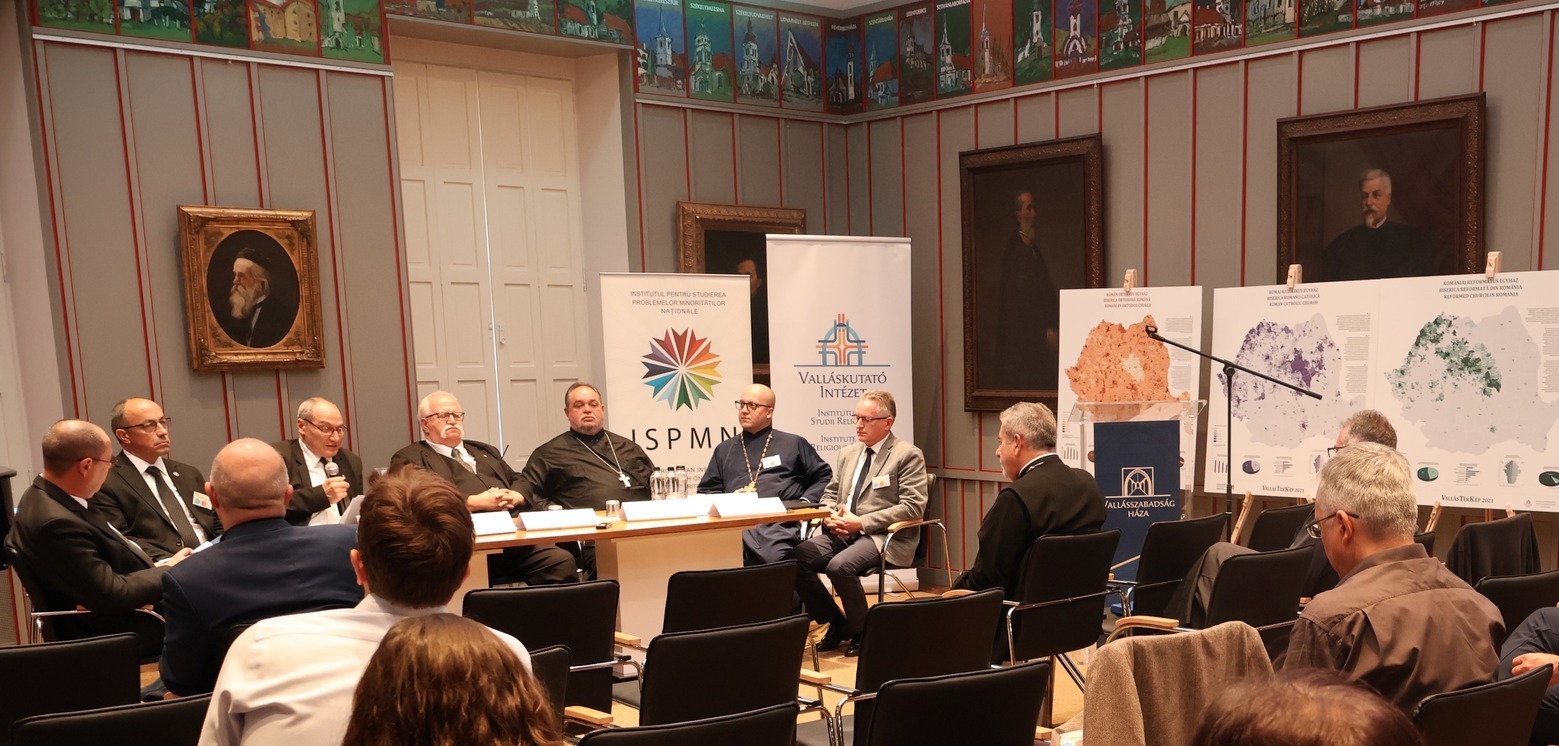
At the opening of the event, held at the House of Religious Freedom, participants were greeted by Kovács István, Bishop of the Hungarian Unitarian Church, as the event's host, and by Novák Zoltán, Director of the Institute for the Study of National Minority Issues, and Bálint Róbert Zoltán, a researcher at our institute, on behalf of the co-organizing institutions.
The first plenary presentation of the conference was delivered by Ciprian Vasile Olinici, State Secretary for Religious Affairs, who spoke about the role of the state’s religious and confessional policies in maintaining the country's ethnic diversity, followed by a Q&A session with the conference participants.
After the break, the opening of an exhibition of religious maps of Romania (Cartographic Representation of Religions in Romania) took place, presented by Kiss Dénes, a researcher from the Institute of Religious Studies.
The Role of Churches in Maintaining Ethnic Diversity in Romania
On the first day of the conference, our institute organized a symposium on this topic, where, together with invited religious leaders and representatives of minority ethnic churches, we discussed the situation of ethnic diversity within churches.
During the first round table, titled Managing Ethnic and Linguistic Diversity in Churches, our guests – Fr. Prof. Nóda Mózes, Episcopal Consistorial Assessor, Roman Catholic Archdiocese of Alba Iulia, H.E. Iusuf Muurat, Mufti of the Muslim Muftiate of Romania, Fr. Tofană Vasile, General Vicar, Romanian Greek Catholic Church, Fr. Filep István, Seventh-day Adventist Church, Dr. Rafael Năstase, researcher, Christian Evangelical Church, and H.E. Adorjáni Dezső Zoltán, Bishop, Evangelical-Lutheran Church of Romania – spoke about the main ethnic groups within the churches they represented, the role of churches and religious culture in preserving the identity of these ethnic groups, as well as the linguistic and organizational strategies employed by churches to manage diversity. The discussion was moderated by Kovács Sándor, Rector of the Protestant Theological Institute.
Converging Identities: Living Ethnic and Religious Identity in a Church Context – Round Table II
During the second round table in the afternoon of the symposium, together with our guests, we discussed the relationship between ethnic and religious identity from the perspective of minority ethnic groups. Participants in this round table were leaders or representatives of churches that identify as churches of a certain ethnic group or representatives of ethnic groups within a multi-ethnic church: H.E. Kovács István, Bishop of the Hungarian Unitarian Church, Fr. Szegedi László, Episcopal Vicar, General Director of the Reformed Diocese of Transylvania, Fr. stv. Dr. Marinco Marcov, Vicar of the Serbian Orthodox Diocese of Timișoara, Fr. Dusan Vanko, Evangelical-Lutheran Church, Nădlac, Dr. Puskás Attila, theologian, President of the Union of Hungarian Armenians in Transylvania, and Fr. cons. Marius N. Lauruc, Ukrainian Orthodox Vicariate. The discussion was moderated by Andrási Benedek, Episcopal Vicar of the Unitarian Church. Topics covered included the historical relationship between minority communities and churches, the use of minority languages in various areas of church life, and the role of churches in maintaining the ethno-linguistic vitality of minority groups.
Being at Odds – Ambiguities, Incompatibilities, and the Problem of Minorities - Plenary Lecture
In the late afternoon, James A. Kapaló, ethnographer and historian of religions, Professor at the Department of Religious Studies at University College Cork, delivered a plenary lecture titled "Being at Odds – Ambiguities, Incompatibilities, and the Problem of Religious Minorities." In his presentation, the author discussed the importance of religion in the relationship between minority communities and nation-states, based on his research conducted among minority ethno-religious groups in Romania, Moldova, Hungary, and Ukraine, highlighting “transnational and transtemporal” religious phenomena that “rarely coincide with the geography or history of nations and rarely adhere to ethnic or linguistic boundaries.”
Clandestine Religious Practices in Secret Police Documents – Book Launch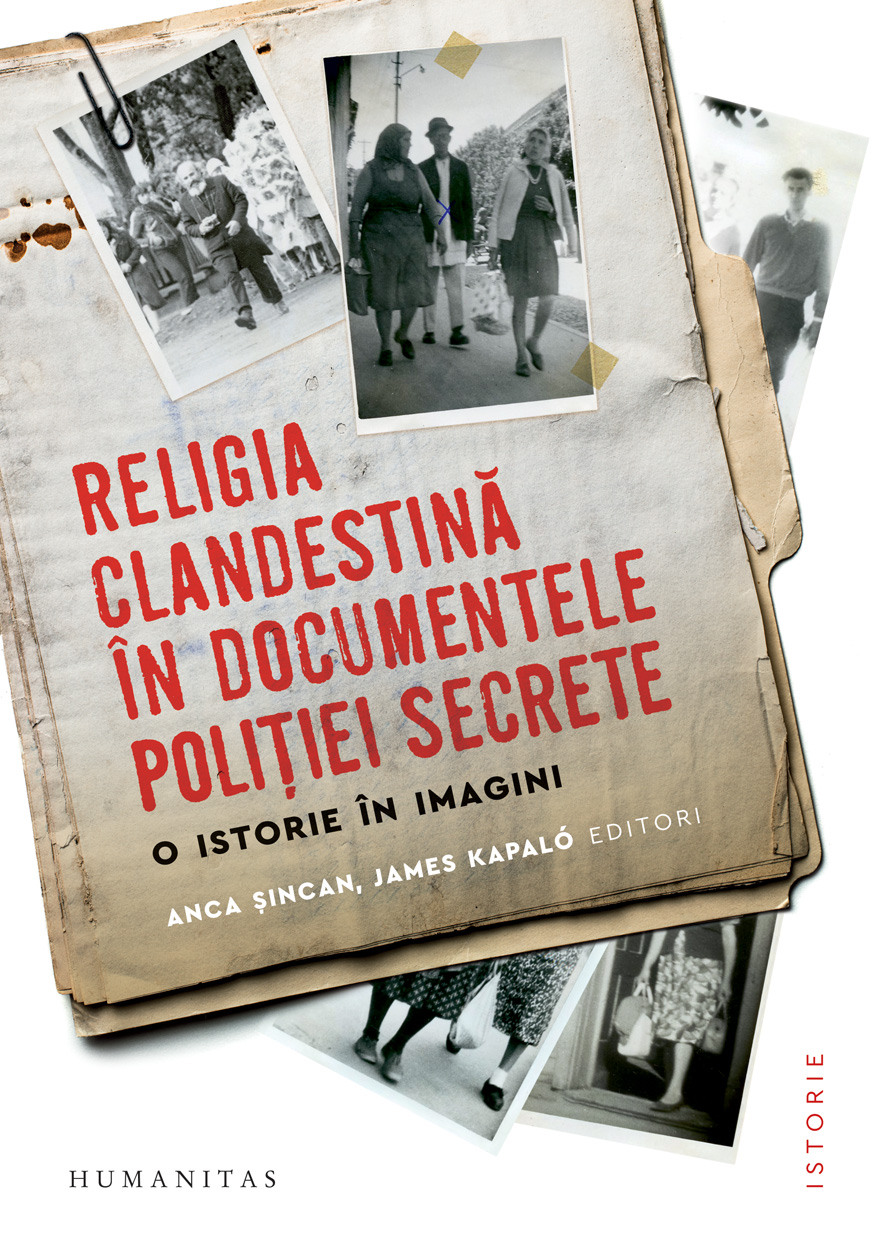
The first day of the conference concluded with the presentation of the volume "Clandestine Religion in Secret Police Documents. A History in Images," edited by Anca Șincan and James Kapaló, with the collaboration of Silviu Moldovan, Director of Research at the National Council for the Study of the Securitate Archives. The book explores the religious minorities persecuted by the communist regime through objects confiscated during Securitate investigations, which were preserved in its archives and thus, paradoxically, saved for posterity. More details about the book are available here:
https://humanitas.ro/humanitas/carte/religia-clandestina-in-documentele-politiei-secrete
Conference Presentations
On the first day of the conference, parallel to the symposium, there were nine academic presentations in English, addressing topics related to religion and national identity, as well as the role of religious rituals in the social participation of Roma ethnic communities.
On Friday, in eight parallel sections, there were another 28 presentations, in Romanian and English, exploring the relationship between education and religion, the ritual context of minority identity, and topics related to the relationship between religion and politics. Abstracts of the presentations are available here:
Book of abstracts
We thank the invited lecturers, participants, moderators of the round tables and academic sections, the interested public, our colleagues who ensured the event’s organization behind the scenes, and our supporters for their contribution to the event’s success.
Institute for the Study of National Minority Issues
Institute for Religious Research
Photos: Koppándi Júlia, Kendi Ágnes, Bálint Róbert Zoltán